
Integrated Chemical Engineering Topics I: Process Control by Design
Course facts
- Payment: Free, no certificate
- Credits: Non Credit
- Learning style: Self-paced, start anytime
- Resources: Lecture Notes; Problem Sets
MIT OpenCourseWare details
- As taught in: Fall 2004
- Department: Chemical Engineering

| Course Details | ||||||
|---|---|---|---|---|---|---|
|
||||||
| Outcomes | ||||||
|
||||||
| Price & Terms | ||||||
|
||||||
| Technical | ||||||
|
||||||
| Specification | ||||||
|
||||||

Screen a process design for operability using the Relative Gain Array, Disturbance Cost and simulation, on a simple shower and a heat exchanger network.
A process designed to run steadily must also start up, shut down and cope with disturbances. This short module teaches ways of checking that at the preliminary design stage, before much effort is spent. It starts with a controlled shower, simple enough to derive all the math, then moves on to a heat exchanger network calculated numerically.
What You Will Achieve
- Explain why a process designed for steady state still varies in time
- Calculate the Relative Gain Array and Disturbance Cost
- Simulate a process under proportional control
- Compare alternative designs by their controllability
Program Overview
The Shower Process
A simple system introduces the whole method.
- Feedback structure
- Material and energy balance model
- Linearizing equations
- Scaled deviation variables
Screening Tools
Two measures are then set against simulation.
- The Relative Gain Array
- The Disturbance Cost
- Proportional control and dynamic simulation
- Limitations of the linear model
Heat Exchanger Network
The same tools meet a harder case.
- Heat recovery scheme
- Numerical linearization
- Modified schemes to improve controllability
- Process simulators
Course Completion
Job Outlook
These methods are relevant to chemical process design and process control engineering across the process industries.
Good for: Chemical engineering students who know mass and energy balances and want control considered earlier in design.
Keep in mind: From fall 2004, and only one short module of a larger sequence, with no videos. Problem sets rely on MATLAB, and no solutions are listed among the materials.
Bottom line: A tidy, memorable module: the shower example alone makes a slippery idea easy to hold on to.
Frequently Asked Questions
Why does it use a shower as an example?
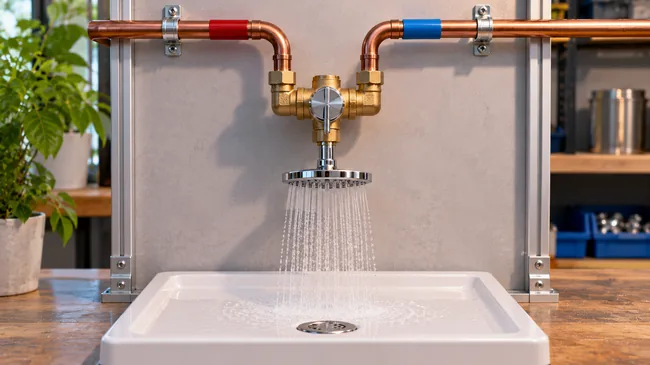
It is a process simple enough for the class to derive all of the math, before moving to a more complicated one solved numerically.
What are RGA and DC?
The Relative Gain Array and the Disturbance Cost, two screening tools derived here for judging operability early in a design.
What does the last session warn about?
A lecture titled Beyond the Scope covers what these methods miss, so you know where screening tools stop being reliable.




There are no reviews yet.