
Experimental Projects I
Course facts
- Payment: Free, no certificate
- Credits: Non Credit
- Learning style: Self-paced, start anytime
- Resources: Lecture Notes; Projects with Examples
MIT OpenCourseWare details
- As taught in: Spring 2003
- Department: Aeronautics and Astronautics

| Course Details | ||||||
|---|---|---|---|---|---|---|
|
||||||
| Outcomes | ||||||
|
||||||
| Price & Terms | ||||||
|
||||||
| Technical | ||||||
|
||||||
| Specification | ||||||
|
||||||

Design your own aerospace experiment with a partner: hypothesis, test matrix, error analysis and proposal writing, with sample student proposals.
For many aerospace students, this class is a first encounter with research standards. Two-person teams conceive their own experiment and design it under a faculty advisor, then build it in the next class, 16.622. Sessions cover hypotheses, test matrices, measurement and error analysis, alongside partner skills, oral proposals and writing.
What You Will Achieve
- State a hypothesis, objective and success criteria
- Design an experiment using test matrices and measurement techniques
- Plan error analysis and data analysis for an experiment
- Write and present a project proposal
Program Overview
Framing a Project
The first weeks choose partners and define a question.
- Picking a partner and collaborative skills
- Ethics and notebooks
- Hypothesis, objective, success criteria
- Literature review
Experiment Design
Teams then plan how to test the idea.
- Experiment design
- Test matrices
- Measurement techniques
- Error analysis
Proposals and Shop
Finally the plan is presented and prepared for building.
- Oral proposals and feedback
- Engineering drawings
- Shop demos
- Final written proposal
Course Completion
Job Outlook
These skills support aerospace engineering, experimental research and technical writing for anyone who has to propose work.
Good for: Aerospace students about to start a project, and instructors designing a research-based lab sequence.
Keep in mind: The page itself says it offers only a profile, since the main learning comes from faculty, advisors and shop staff. From spring 2003, this is the first half; building happens in Experimental Projects II.
Bottom line: Useful preparation materials and strong writing examples for any student beginning a first experiment.
Frequently Asked Questions
What sample work is included?
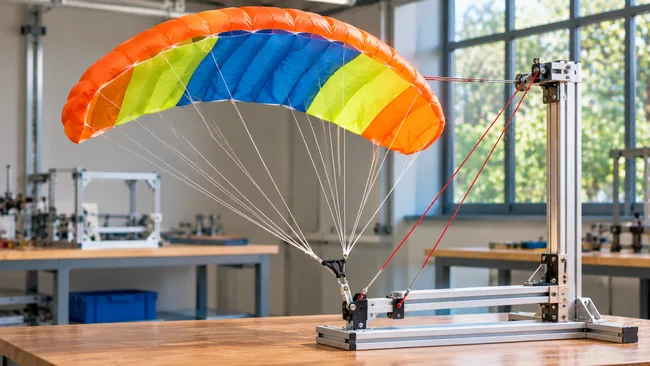
Project statements on space tug rendezvous and steerable parachutes, and final proposals on ice screw performance and shape memory alloy actuators.
Does this class build the experiment?
No. This first class designs it and ends with a written proposal. Teams complete the project in Experimental Projects II.
Why does communication get so much attention?
Sessions on audience analysis, graphic illustration and oral presentations run through the term, and study materials support them.


There are no reviews yet.