
Aerospace Engineering
Aerospace Engineering courses launch learners into the science of flight, covering the aerodynamics, propulsion systems, and structural mechanics required to design vehicles that operate within and beyond Earth’s atmosphere.
Read More
- Key Skills:
- Fluid dynamics, aerodynamics, orbital mechanics, propulsion systems, structural analysis (FEA), avionics, MATLAB/Simulink.
- Typical Duration:
- Most courses take 10–40 hours.
- Top Providers:
- MIT OpenCourseWare, SWAYAM, NPTEL+
Subcategories
- Aeronautical Engineering:
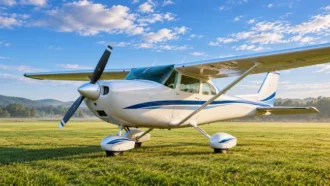
- Focuses specifically on the design and manufacture of aircraft that operate within the Earth’s atmosphere, such as airplanes, helicopters, and drones, emphasizing lift, drag, and flight stability.
Engineering for the Extreme
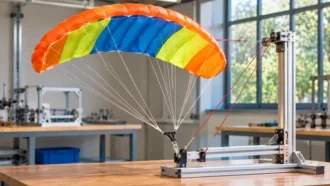
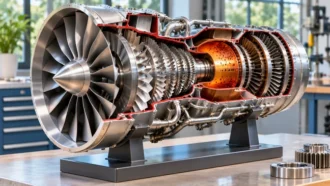
Aerospace Engineering is widely regarded as one of the most challenging and rewarding technical disciplines. It demands a mastery of physics in extreme environments, where materials must withstand the intense heat of re-entry or the crushing pressure of high-G maneuvers. Education in this field begins with the fundamentals of fluid mechanics—understanding how air flows over a wing to generate lift. Learners progress to complex propulsion systems, studying the thermodynamics of jet engines and rocket thrusters. This isn’t just theory; students use industry-standard simulation software like ANSYS Fluent to model airflow and visualize shock waves, ensuring designs are viable before expensive wind tunnel testing.
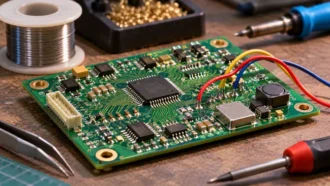
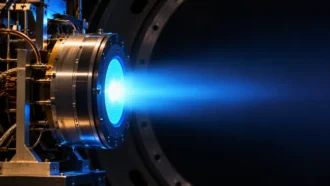
The industry is currently undergoing a renaissance driven by the commercial space race and the push for sustainable aviation. Modern curriculums now incorporate modules on electric propulsion, reusable launch vehicles, and autonomous flight control systems for drones. You will explore “Avionics”—the electronic nervous system of an aircraft—learning how sensors and software work together to fly planes “by wire.” Whether you are calculating the trajectory for a Mars rover or designing a quieter drone for urban delivery, the skills acquired here place you at the cutting edge of human technological capability.
Who Should Enroll?
- Mechanical Engineers: Professionals looking to specialize in high-speed fluid dynamics and lightweight structural design.
- Aspiring Pilots: Individuals who want to understand the deep mechanics behind the machines they operate to become better aviators.
- Space Enthusiasts: Learners driven by the goal of working for companies like SpaceX or Blue Origin to advance human spaceflight.
- Defense Contractors: Engineers needing to understand the specific constraints of military aircraft and missile systems.
Enroll in an Aerospace Engineering course today to master the physics of flight and contribute to the next great leap in human exploration.
Showing 1–12 of 16 resultsSorted by latest



Frequently Asked Questions about Aerospace Engineering Courses
1. What does an aerospace engineer do?
Aerospace engineers design, analyze and test aircraft, spacecraft, satellites and their systems. Their work covers aerodynamics, propulsion, structures, materials, and guidance and control. Many specialize in either aeronautics, which deals with flight within the atmosphere, or astronautics, which deals with spacecraft and missions beyond it.
2. What background do I need for aerospace engineering courses?
Most aerospace courses assume comfort with calculus, physics and basic programming. Introductory courses often review these foundations, while advanced topics such as orbital mechanics or computational fluid dynamics expect university-level mathematics. Check each course's prerequisites and start with an introductory course if you are new to engineering.
3. Can I learn aerospace engineering online?
You can learn much of the theory online, including aerodynamics, flight mechanics, propulsion principles and spacecraft design. Hands-on work such as wind-tunnel testing or building hardware needs labs or industry projects. Online courses are a strong way to build understanding, prepare for a degree or refresh skills for work.
4. What software is used in aerospace engineering?
Engineers commonly use computer-aided design for modeling parts and assemblies, finite element tools for structural analysis, computational fluid dynamics for airflow, and numerical tools such as MATLAB or Python for calculations and simulations. Many courses introduce at least one of these tools through practical exercises.
5. What careers does aerospace engineering lead to?
Graduates work in aircraft and spacecraft manufacturing, airlines and maintenance organizations, defense, satellite and launch companies, and research institutions. Roles include design engineer, structural or propulsion engineer, systems engineer and test engineer. Related skills also transfer to automotive, energy and drone industries.
6. How do I choose an aerospace engineering course?
Decide whether you want a broad introduction or a specific topic such as aerodynamics, propulsion or space systems. Compare the course level, the mathematics it expects, how long it takes and whether it includes problem sets or projects. Courses from universities often follow their undergraduate syllabus closely.