
Space Propulsion
Course facts
- Payment: Free, no certificate
- Credits: Non Credit
- Learning style: Self-paced, start anytime
- Resources: Lecture Notes; Problem Sets
- Before you start: 16.50 Introduction to Propulsion Systems
MIT OpenCourseWare details
- As taught in: Spring 2015
- Department: Aeronautics and Astronautics

| Course Details | ||||||
|---|---|---|---|---|---|---|
|
||||||
| Outcomes | ||||||
|
||||||
| Price & Terms | ||||||
|
||||||
| Technical | ||||||
|
||||||
| Specification | ||||||
|
||||||

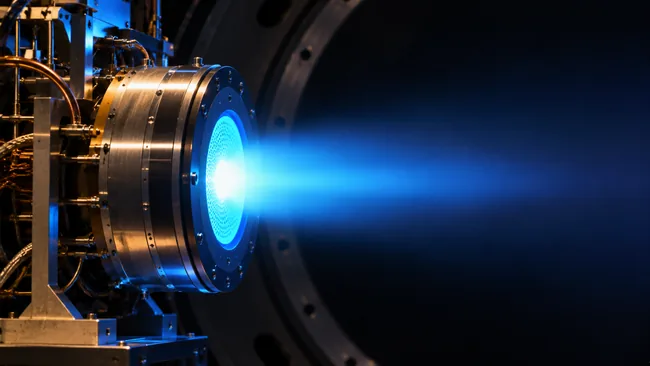
Rocket and space propulsion: mission analysis, plasma physics, ion engines, Hall thrusters, arcjets, electrosprays and electrodynamic tethers.
Getting a spacecraft where it needs to go takes the right engine for the mission. This course covers the fundamentals of rocket propulsion and advanced concepts in space propulsion, chemical and electrical thrusters alike, together with satellite power systems and their relation to propulsion. It works through mission planning and low-thrust maneuvers, the plasma physics behind electric propulsion, and the main thruster types: monopropellant, electrothermal and arcjet, electrostatic ion engines, Hall thrusters, magnetoplasmadynamic thrusters, electrosprays and electrodynamic tethers.
What You Will Achieve
- Analyze a space mission and the propulsion needs of low-thrust maneuvers
- Explain the plasma physics that electric thrusters depend on
- Compare ion engines, Hall thrusters, arcjets and electrosprays by how they work and perform
- Characterize the performance of a space propulsion device
Program Overview
Missions and Maneuvers
What a mission demands of its engines.
- Fundamentals and definitions
- Mission analysis and classical astrodynamics
- Low-thrust maneuvers, climb and plane change
Plasma Physics and Electrostatic Thrusters
The physics behind electric propulsion.
- Basic electromagnetic theory and plasma physics
- The plasma sheath
- Kaufman ion engines
- Characterizing propulsion devices
Engines by Type
The main engines, one by one.
- Monopropellant thrusters, electrothermal augmentation and arcjets
- Hall thrusters and their efficiency
- Magnetoplasmadynamic thrusters
- Electrosprays, ionic emission and electrodynamic tethers
Course Completion
Job Outlook
This knowledge is used in spacecraft propulsion engineering, satellite design and plasma and space research.
Good for: Aerospace engineering students who want electric and chemical space propulsion explained from the physics up.
Keep in mind: A spring 2015 course with lecture notes and five problem sets; the laboratory project in a vacuum chamber required safety training and lab access on campus.
Bottom line: A physics-first course on space thrusters, strongest on electric propulsion.
Frequently Asked Questions
Which book goes with the course?
Robert G. Jahn's Physics of Electric Propulsion, with journals such as the Journal of Propulsion and Power and the Journal of Spacecraft and Rockets as further resources.
What was the laboratory project?
A hands-on project at the Space Propulsion Laboratory; the posted materials include its description, lab rules, vacuum chamber procedures and NASA's technology readiness level definitions.
Does it cover Hall thrusters?
Yes. Three sessions treat Hall thrusters, their efficiency and a fluid model of the discharge, alongside ion engines, arcjets and electrosprays.

There are no reviews yet.