
Materials in Human Experience
Course facts
- Payment: Free, no certificate
- Credits: Non Credit
- Learning style: Self-paced, start anytime
MIT OpenCourseWare details
- As taught in: Spring 2004
- Department: Materials Science and Engineering

| Course Details | ||||||
|---|---|---|---|---|---|---|
|
||||||
| Outcomes | ||||||
|
||||||
| Price & Terms | ||||||
|
||||||
| Specification | ||||||
|
||||||

How pre-modern peoples chose and worked materials such as glass, Andean metals and Mesoamerican rubber, studied through archaeology and materials science.
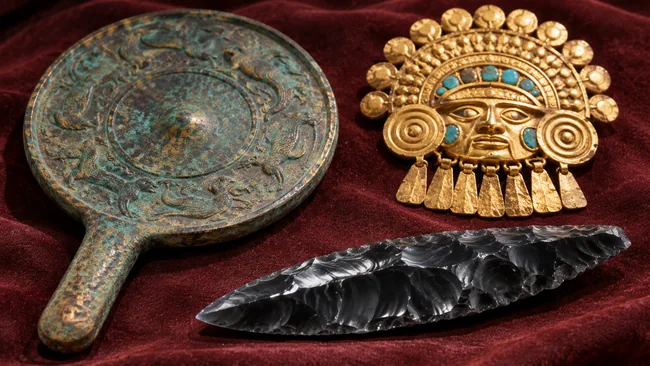
Why did past societies choose the materials they did, and how much were those choices driven by beliefs and aesthetics rather than performance? This course studies how pre-modern peoples selected, evaluated and transformed natural materials into cultural objects, combining the methods of the archaeologist, the historian and the materials scientist. Three case studies, ancient glass, Andean metallurgy and rubber processing in ancient Mesoamerica, each pair the materials engineering with its social setting and laboratory sessions worked with the materials themselves.
What You Will Achieve
- Explain how ideological and aesthetic values shaped the development of materials
- Describe ancient smelting, alloying and metalworking techniques in materials science terms
- Use laboratory analysis of artifacts to infer the technologies that made them
- Compare the Andean sheet-metal tradition with Mesoamerican casting and explain the difference
Program Overview
Andean and Old World Metallurgy
How metal was won from ore, and how two traditions shaped it.
- Ancient metallurgy of the New World and the Old World compared
- Extractive metallurgy and Andean smelting technologies
- Andean sheet metal versus Mesoamerican casting
Color and the Power of Metal
Why color and surface mattered most in the Andean world.
- Andean alloy development and surface enrichment
- Color and planarity in Andean cosmology
- Bronze versus tumbaga
- Andean metal artifacts at the CMRAE laboratories
Laboratory
Hands-on work with copper and copper-silver alloys.
- Smelting copper ore
- Sand molds and pouring molten alloy
- Silver-coated sheet metal by deformation, annealing and pickling
Course Completion
Job Outlook
This blend of materials science and archaeology is used in archaeological science, museum conservation and the history of technology.
Good for: Students of materials science or archaeology who want to see engineering and culture studied together.
Keep in mind: A spring 2004 course: the posted schedule covers only the Andean metallurgy unit, so glass and rubber appear only in the syllabus, and the labs and field trips took place on campus.
Bottom line: Ancient metalworking read as both physical matter and cultural choice, with the lab steps laid out session by session.
Frequently Asked Questions
What happens in the laboratory sessions?
In the metallurgy unit, students smelted copper ore, cast copper-silver alloys in sand molds, and made silver-coated sheet metal by plastic deformation, annealing and pickling.
What do students present and write?
Each student joins a group presentation on one of the three materials, glass, metal or rubber, and writes two short papers on the other two units, with weekly readings from a selected bibliography.
Why did color matter so much in Andean metalwork?
The course links Andean alloy development and surface enrichment to color and planarity, metallic properties that carried meaning in Andean cosmology, and compares the power of bronze with tumbaga.

There are no reviews yet.