
Mechanical Assembly and Its Role in Product Development
Course facts
- Payment: Free, no certificate
- Credits: Non Credit
- Learning style: Self-paced, start anytime
- Resources: Lecture Notes; Projects
- Before you start: 2.008
MIT OpenCourseWare details
- As taught in: Fall 2004
- Department: Mechanical Engineering

| Course Details | ||||||
|---|---|---|---|---|---|---|
|
||||||
| Outcomes | ||||||
|
||||||
| Price & Terms | ||||||
|
||||||
| Technical | ||||||
|
||||||
| Specification | ||||||
|
||||||

Learn a systematic approach to assemblies: part mating, datum flow chains, tolerances, design for assembly and assembly line economics, with a term project.
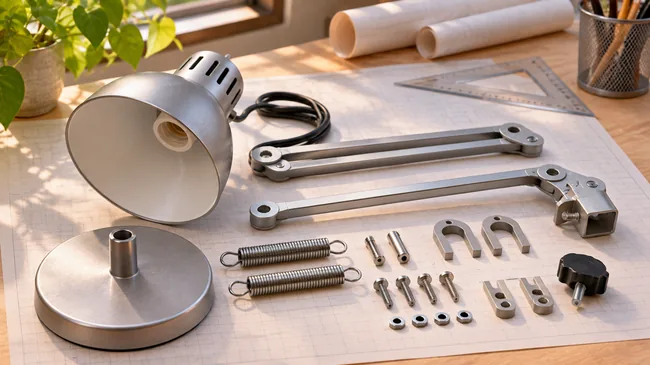
Much is written about making individual parts, far less about how they go together into a working product. This graduate class offers a systematic approach to that question, using part mating theory, the datum flow chain and assembly system economics. Each team takes apart a real product, then designs an assembly line for it.
What You Will Achieve
- Model rigid part mating and the Remote Center Compliance
- Analyze constraint, tolerances and variation in an assembly
- Use datum flow chains and assembly sequence analysis
- Design an assembly workstation and test its economics by simulation
Program Overview
Assembly in the Small
Early sessions look at how two parts actually go together.
- Assembly motions and forces
- Rigid part mating theory
- Remote Center Compliance
Modeling Assemblies
Assemblies are then described mathematically.
- Key characteristics and feature-based modeling
- Constraint and variation buildup
- Assembly sequence analysis
- The datum flow chain
Assembly in the Large
The view widens to the product and the factory, then to real cases.
- Product architecture and design for assembly
- Kinds of assembly lines and equipment
- Economic analysis and flexible manufacturing
- 767 wing case study
Course Completion
Job Outlook
The methods are directly relevant to mechanical design, manufacturing engineering and production systems work.
Good for: Mechanical and manufacturing engineers who want a disciplined way to judge whether an assembly is well designed.
Keep in mind: From fall 2004 and built around Daniel Whitney’s textbook, which the problem sets need. There are no videos, and the term project asks you to buy a product and work with a team.
Bottom line: A focused treatment of a subject the syllabus says is little written about; if you make physical products, the datum flow chain may repay the effort.
Frequently Asked Questions
What does the term project involve?
You choose a product such as a power tool, lamp or small appliance, then write six reports ending with an assembly line design and an economic simulation.
Is the textbook essential?
Effectively, yes. The four problem sets are assigned from chapters of Whitney's Mechanical Assemblies, and the student project examples come on its CD.
What is the case study at the end?
A session is given to the 767 wing, just before the final student project presentations.


There are no reviews yet.