
Principles and Concepts of Montessori Education
Course facts
- Payment: Free to learn, certificate paid
- Credits: CPD Credits
- Learning style: Self-paced, start anytime
- Format: Video Based
- Video access: Offline Download (App)
- Refund: Conditional Refund

| Course Details | ||||||||
|---|---|---|---|---|---|---|---|---|
|
||||||||
| Languages | ||||||||
|
||||||||
| Outcomes | ||||||||
|
||||||||
| Price & Terms | ||||||||
|
||||||||
| Technical | ||||||||
|
||||||||
| Specification | ||||||||
|
||||||||

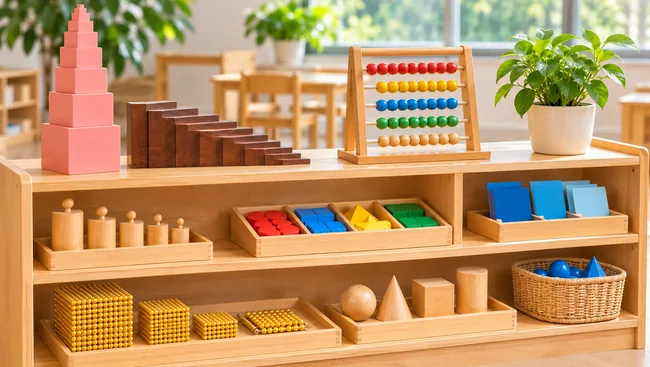
Learn the principles of Montessori education and apply them to the prepared environment, hands-on materials and the structure of daily learning.

Montessori education rests on self-directed, hands-on discovery in a prepared environment, with the educator acting as a guide rather than a direct instructor. The lessons set the method beside traditional education and look at its philosophy, the sensitive periods of child development, sensorial learning materials, freedom within limits, and how the approach adapts to different age groups and modern settings.
What You Will Achieve
- Arrange a classroom space that supports self-directed learning, focus and self-discipline
- Explain how Montessori practice differs from traditional education methods
- Plan daily learning experiences around Montessori principles and intrinsic motivation
- Act as a guide rather than a direct instructor, using Montessori materials for hands-on learning
Program Overview
Montessori Philosophy, Environment, and the Educator’s Role
The origins and thinking behind the method, and how the classroom and the adult together support child-centered learning.
- Origins and philosophy of the Montessori approach
- The prepared environment
- The educator as a guide
Developmental Stages, Materials, and Freedom Within Limits
How a child’s developmental stage shapes what they are ready to learn, and how materials and boundaries support independent work.
- Developmental stages and sensitive periods
- Learning materials and sensorial exploration
- Freedom within limits
Curriculum Areas, Age Groups, and Modern Settings
How Montessori principles carry into subject areas and different ages, and how the approach meets the challenges of modern settings.
- Curriculum areas in Montessori education
- Montessori across age groups
- Challenges and adaptations in modern settings
Certificate Awarded (Paid)
Pass the course assessment to earn it. The course is free to study; the certificate is optional and has a fee.
Job Outlook
Montessori principles are used in preschools, kindergartens and early learning centers, and in classrooms for older children that follow a child-centered, hands-on approach.
- Preschool Teacher
- Kindergarten Teacher
- Early Education Teacher
Good for: Teachers and aspiring educators in early years settings who want to understand Montessori thinking and try its ideas in their own classroom.
Keep in mind: The course awards its own certificate of completion, not a Montessori teaching qualification, and its prepared environment and materials are described in video lessons rather than practiced hands-on.
Bottom line: A well-ordered look at Montessori that ties its philosophy to everyday choices about the room, the materials and the adult’s role.
Frequently Asked Questions
Does the certificate qualify me as a Montessori teacher?
No. Passing the course assessment earns the course's own certificate of completion. It is a course certificate, not a teaching license or an accredited Montessori diploma.
Who wrote the lessons, and was AI involved?
The content was created in partnership with Shah Naha Asad, a content writer and Montessori educator. Parts of the text were drafted with GPT-4o, then reviewed, edited and revised by the author and subject matter experts.
Does it look at Montessori beyond the preschool years?
Yes. One lesson looks at how the approach works across age groups and another at its curriculum areas, so the course does not stop at the youngest children. A further lesson covers challenges and adaptations in modern settings.



There are no reviews yet.