
Aeronautical Engineering
Aeronautical Engineering courses immerse learners in the physics of atmospheric flight, teaching the design, propulsion, and aerodynamic principles required to build aircraft that defy gravity.
Read More
- Key Skills:
- Aerodynamics, fluid mechanics, aircraft structures, flight dynamics, propulsion systems, avionics, CFD (Computational Fluid Dynamics).
- Top Providers:
- MIT OpenCourseWare
Mastering the Skies
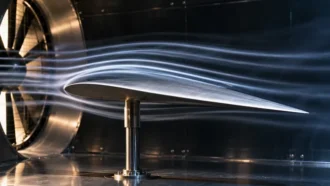
Aeronautical Engineering is the specific discipline dedicated to vehicles that fly within the Earth’s atmosphere. While it shares a foundation with Aerospace Engineering, its focus is sharper: mastering the interaction between a vehicle and the air around it. Education in this field starts with the four forces of flight—lift, weight, thrust, and drag. Learners study how wing shapes (airfoils) manipulate air pressure to generate lift and how streamlined fuselage designs minimize resistance. This involves rigorous training in fluid dynamics, using complex calculus to model airflow patterns that are invisible to the naked eye.
The modern aeronautical curriculum is heavily influenced by the push for sustainability and the rise of autonomous systems. You will explore the engineering behind electric aircraft and hydrogen propulsion, technologies aimed at decarbonizing the aviation industry. Drones (UAVs) are another major focus, requiring new approaches to stability and control systems. Courses also cover “Aeroelasticity”—the study of how an aircraft’s structure flexes under aerodynamic loads—ensuring that wings don’t snap during turbulence. Whether you are designing a supersonic fighter jet or an ultra-efficient cargo drone, the goal is to create machines that are safe, reliable, and capable of performing in the dynamic environment of the sky.
Who Should Enroll?
- Mechanical Engineers: Professionals seeking to specialize in aerodynamics and fluid flow applications.
- Aviation Technicians: Maintenance experts who want to move into design and engineering roles to understand the “why” behind the repairs they perform.
- Drone Pilots/Operators: Individuals looking to build their own custom UAV platforms for commercial or racing use.
- Defense Industry Professionals: Engineers working on military aircraft programs who need to deepen their knowledge of high-performance flight dynamics.
Enroll in an Aeronautical Engineering course today to master the science of flight and design the next generation of airborne technology.
Showing the single result
Frequently Asked Questions about Aeronautical Engineering Courses
1. What is the difference between Aeronautical and Aerospace Engineering?
Aeronautical Engineering focuses specifically on aircraft that operate within the Earth’s atmosphere (airplanes, helicopters). Aerospace Engineering is the broader umbrella that includes both Aeronautical Engineering and Astronautical Engineering (spacecraft operating outside the atmosphere). If you want to design planes, Aeronautical is the precise fit.
2. Do I need a pilot’s license to be an aeronautical engineer?
No, you do not need a pilot’s license. Engineers design and build the aircraft; pilots fly them. However, understanding flight operations from a pilot’s perspective is valuable, and many engineers pursue a private pilot license as a hobby or professional development tool.
3. What software is standard in this field?
You will use Computational Fluid Dynamics (CFD) software like ANSYS Fluent to simulate airflow. For design, CATIA and Siemens NX are industry standards for creating complex 3D surfaces. MATLAB and Simulink are essential for modeling flight control systems and dynamics.
4. Is this field relevant for drones (UAVs)?
Yes, extremely relevant. Drones obey the same laws of aerodynamics as manned aircraft. Aeronautical engineering courses teach the stability, control, and propulsion principles required to design efficient and stable UAVs for delivery, surveillance, or photography.
5. How much math is involved?
Aeronautical Engineering is very math-intensive. You will need a strong grasp of calculus, differential equations, and linear algebra to understand fluid dynamics and structural analysis. The “Navier-Stokes equations,” which describe fluid motion, are a central (and challenging) part of the theoretical curriculum.
6. What is “Avionics”?
Avionics (Aviation Electronics) refers to the electronic systems used on aircraft, including communications, navigation, and flight management systems. Modern aircraft are “fly-by-wire,” meaning computers interpret the pilot’s inputs. Understanding how these electronic systems interface with mechanical control surfaces is a critical skill.
7. Can I work in the automotive industry with this degree?
Yes, the skills are highly transferable. Automotive companies hire aeronautical engineers to improve the aerodynamics of cars (reducing drag to improve fuel economy) and to design internal combustion or electric propulsion systems. Formula 1 teams, in particular, rely heavily on aeronautical principles.
8. What is “Aeroelasticity”?
Aeroelasticity is the study of the interaction between aerodynamic forces and the structural elasticity of the aircraft. In simple terms, it studies how wings bend and twist when air hits them. Engineers must ensure this flexibility doesn’t lead to “flutter,” a dangerous vibration that can destroy the aircraft mid-flight.
9. How does the industry address sustainability?
Sustainability is a major driver of innovation. You will learn about “Green Aviation” initiatives, such as designing lighter composite airframes to save fuel, developing electric and hybrid-electric propulsion systems, and optimizing flight paths to reduce noise and emissions.
10. What are the career prospects?
Career prospects are strong, driven by the commercial aviation sector’s need for more efficient planes and the defense sector’s need for advanced technology. The booming urban air mobility (UAM) market—”flying taxis”—is also creating new opportunities for engineers who can design vertical take-off and landing (VTOL) vehicles.