
Analysis and Design of Feedback Control Systems
Course facts
- Payment: Free, no certificate
- Credits: Non Credit
- Learning style: Self-paced, start anytime
- Resources: Problem Sets; Projects
MIT OpenCourseWare details
- As taught in: Spring 2014
- Department: Mechanical Engineering

| Course Details | ||||||
|---|---|---|---|---|---|---|
|
||||||
| Outcomes | ||||||
|
||||||
| Price & Terms | ||||||
|
||||||
| Technical | ||||||
|
||||||
| Specification | ||||||
|
||||||

A course on feedback control design, covering root locus, loop shaping, state feedback and digital control, with 11 problem sets and a design project.
Keeping a system steady despite disturbances is the job of feedback, and designing it well takes both analysis and hands-on testing. This class develops the fundamentals using linear transfer function models, in the time and frequency domains. It then extends to state-space and digital systems, while weekly labs apply the methods to real circuits and motors and a final design project pulls them together.
What You Will Achieve
- Design controllers with root locus and loop shaping
- Assess stability with the Nyquist test and margins
- Apply state feedback and observers
- Build and tune PI and PID controllers in the lab
Program Overview
PID Control and Root Locus
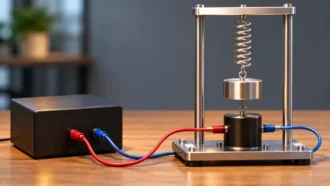
The class starts with basic time responses and classic controller design, using magnetic levitation as a case study.
- On / off control
- Multidomain modeling
- Root locus-based design
- PI and PID controllers
Frequency Response and Loop Shaping
The next stretch moves to the frequency domain and practical compensators.
- Sketching Bode plots
- Nyquist test
- Lead, lag and resonant notch compensators
- Op-amp circuit lab
State Feedback and Discrete-Time Control
Later lectures add modern, digital and nonlinear methods, with servomotor labs and a design project.
- Observers and state feedback
- Discrete-time control systems
- Nonlinear state models
- Servomotor velocity and position control
Course Completion
Job Outlook
Control design is used in robotics, precision machines, automotive and aerospace systems, and industrial automation.
Good for: Mechanical and electrical engineering students learning feedback control, and practicing engineers who want a design-focused refresher.
Keep in mind: Only problem sets and a project are published, with no lecture notes or videos, so you need the Franklin, Powell and Emami-Naeini textbook. The weekly labs need hardware that you may not have.
Bottom line: A practical, design-heavy control course with a solid problem collection, best paired with its textbook.
Frequently Asked Questions
Which textbooks does the class use?
It uses Feedback Control of Dynamic Systems by Franklin, Powell and Emami-Naeini, and Operational Amplifiers by James Roberge, which is available as a free electronic textbook.
What did the lab sessions involve?
Students attended a three-hour session each week, working through topics such as a thermal control loop, an op-amp circuit, current control and servomotor velocity and position control.
How does the design project work?
A final design problem is assigned in the last two weeks, applying the course's topics to a realistic case. Students work on it individually and can consult only the course staff.


There are no reviews yet.