
The Peripheral Auditory System
Course facts
- Payment: Free, no certificate
- Credits: Non Credit
- Learning style: Self-paced, start anytime
MIT OpenCourseWare details
- As taught in: Fall 2005
- Department: Health Sciences and Technology

| Course Details | ||||||
|---|---|---|---|---|---|---|
|
||||||
| Outcomes | ||||||
|
||||||
| Price & Terms | ||||||
|
||||||
| Specification | ||||||
|
||||||

Experimental approaches to hearing and deafness: inner-ear anatomy, hair cells, the cochlear amplifier and sensorineural hearing loss.
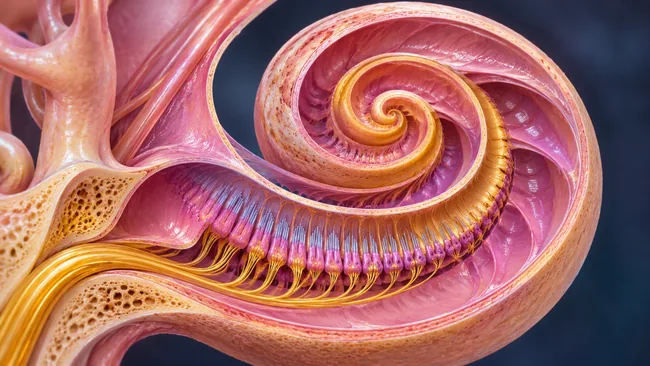
How does the inner ear turn sound into nerve signals, and what goes wrong in deafness? This course presents experimental approaches to hearing, moving through functional anatomy of the inner ear, cochlear mechanics, transduction by hair cells, the cochlear amplifier and otoacoustic emissions. It continues with synaptic transmission, coding in auditory nerve responses and efferent control, then damage and repair of hair-cell organs and sensorineural hearing loss.
What You Will Achieve
- Describe the functional anatomy of the inner ear and auditory periphery
- Explain mechano-electric transduction by hair cells and the cochlear amplifier
- Interpret stimulus coding in auditory nerve responses
- Read primary literature on the causes of sensorineural hearing loss
Program Overview
Anatomy and Hair Cells
The structures of the inner ear and how they transduce sound.
- Anatomy of the auditory periphery
- Stria and endocochlear potential
- Hair cells and transduction
- Electromotility, tuning and mechanics
Coding and Control
What the auditory nerve carries and how the brain adjusts the ear.
- Afferent transmission
- Auditory nerve response
- ABRs and OAEs
- Efferent control
Development and Hearing Loss
How the inner ear forms and how it is damaged.
- Inner ear development
- Trauma and repair
- Sensorineural hearing loss
Course Completion
Job Outlook
This grounding in the peripheral auditory system supports research on hearing and deafness and related work in hearing science.
Good for: Students of hearing science and auditory neuroscience who want to learn the field through its experimental literature.
Keep in mind: Six problem sets and a session plan are published, from 2005. The anatomy and mouse hearing labs and the student-led paper discussions were in person, and no lecture notes are listed.
Bottom line: A research-minded tour of the inner ear, with problem sets and a clear order for reading the literature.
Frequently Asked Questions
What were the two laboratory exercises?
One was the anatomy of the auditory periphery, viewing slides by light and electron microscopy. The other assessed mouse hearing by recording brainstem evoked responses and otoacoustic emissions.
Are there books worth buying?
Students were strongly encouraged to buy C. Daniel Geisler's book on the physiology of the mammalian ear, along with Molecular Biology of the Cell by Alberts and others.
How did the weekly structure work?
Each week paired a lecture summarizing basic principles with a discussion of research papers on earlier topics, guided by study questions. Six recitation sessions went over the problem sets.

There are no reviews yet.