
Audiology
Audiology courses train specialized healthcare professionals to diagnose, treat, and manage hearing and balance disorders, restoring communication and quality of life for patients across the lifespan.
Read More
- Key Skills:
- Audiometric testing, hearing aid fitting, vestibular assessment, cochlear implant mapping, patient counseling, sign language basics, tinnitus management.
- Top Providers:
- MIT OpenCourseWare
The Science of Sound and Balance
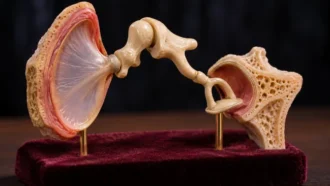
Audiology is a highly technical clinical discipline that sits at the intersection of physics and physiology. Education in this field starts with the anatomy of the ear and the neural pathways of the auditory system. Learners master the use of audiometers and tympanometers to conduct comprehensive hearing evaluations, interpreting audiograms to pinpoint the type and degree of hearing loss. Beyond the ear itself, the curriculum delves into the vestibular system—the delicate balance organs in the inner ear—teaching students to diagnose vertigo and dizziness disorders that affect mobility and safety.
Technology is the audiologist’s primary tool. Modern courses focus heavily on the calibration and fitting of advanced digital hearing aids and assistive listening devices. You will learn about “Psychoacoustics,” understanding how the brain perceives sound, which is critical for programming cochlear implants for patients with profound deafness. The role also demands high emotional intelligence; audiologists often counsel patients struggling with the social isolation that comes with hearing loss. Whether working with newborns in a screening program or helping seniors reconnect with their families, the audiologist acts as the vital bridge between a silent world and one filled with sound.
Who Should Enroll?
- Aspiring Audiologists: Students preparing for a Doctor of Audiology (Au.D.) program who need foundational coursework in acoustics and anatomy.
- Speech-Language Pathologists: Professionals seeking to cross-train in hearing science to better support clients with communication disorders.
- Hearing Aid Dispensers: Technicians looking to deepen their clinical knowledge and understanding of auditory pathology.
- Educators of the Deaf: Teachers who need to understand the technical aspects of hearing devices used by their students in the classroom.
Enroll in an Audiology course today to master the complex science of hearing and empower individuals to engage fully with the world around them.
Showing all 2 resultsSorted by latest

Frequently Asked Questions about Audiology Courses
1. Do I need a doctorate to practice Audiology?
In the United States, a Doctor of Audiology (Au.D.) is the standard requirement to become a licensed clinical audiologist. However, in many other countries, a Master’s degree is sufficient. There are also assistant-level roles and hearing aid dispenser licenses that require less education, often just a diploma or specialized certificate.
2. What is the difference between an Audiologist and an ENT (Ear, Nose, and Throat) doctor?
An ENT (Otolaryngologist) is a medical doctor who performs surgery and treats medical diseases of the ear, nose, and throat. An Audiologist is a non-medical specialist who focuses specifically on the evaluation and rehabilitation of hearing and balance, including prescribing hearing aids. They often work together.
3. What is an “Audiogram”?
An audiogram is a graph that shows the softest sounds a person can hear at different pitches or frequencies. It is the primary tool used to diagnose hearing loss. Courses teach you how to plot these graphs based on patient responses and interpret the patterns to determine if the loss is conductive, sensorineural, or mixed.
4. Do these courses cover cochlear implants?
Yes, advanced modules cover cochlear implants, which are surgically implanted electronic devices that provide a sense of sound to a person who is profoundly deaf. You learn about the candidacy criteria for surgery and the “mapping” process, where the audiologist programs the device’s external processor to suit the patient’s brain.
5. What is “Tinnitus” and can it be treated?
Tinnitus is the perception of noise or ringing in the ears when no external sound is present. While there is often no cure, courses teach management strategies like Tinnitus Retraining Therapy (TRT) and sound masking. Audiologists play a key role in helping patients habituate to the sound so it becomes less distressing.
6. How much physics is involved?
Audiology involves a significant amount of acoustics, which is a branch of physics. You need to understand properties of sound waves like frequency (pitch), intensity (loudness), and resonance. This knowledge is essential for understanding how hearing aids amplify sound and how the ear canal changes sound properties.
7. What is “Vestibular Rehabilitation”?
Vestibular Rehabilitation is a specialized form of therapy intended to alleviate both the primary and secondary problems caused by vestibular disorders (balance issues). Audiologists learn to perform maneuvers (like the Epley maneuver) to treat conditions like BPPV (Benign Paroxysmal Positional Vertigo), where crystals in the inner ear get dislodged.
8. Can I learn to fit hearing aids online?
You can learn the software and theoretical principles of fitting hearing aids online, but the physical practice of taking ear impressions and placing the device requires in-person training. Most online programs include a practical component or mentorship requirement to ensure you can perform these delicate tasks safely.
9. How does Audiology relate to Speech Therapy?
Hearing is the foundation of speech development. If a child cannot hear, they cannot learn to speak clearly. Audiologists and Speech-Language Pathologists work closely together. Audiology courses often include modules on speech perception to help professionals understand the impact of hearing loss on language acquisition.
10. What are the career prospects?
Career prospects are excellent. As the global population ages, the prevalence of age-related hearing loss is skyrocketing. Additionally, the increased use of headphones and exposure to loud noise is driving demand for hearing services among younger populations. Jobs are available in hospitals, private clinics, schools, and the military.