
Shipboard Safety: Emergency Equipment and Life-Saving Appliances
Course facts
- Payment: Free to learn, certificate paid
- Credits: CPD Credits
- Learning style: Self-paced, start anytime
- Format: Video Based
- Video access: Streaming Only
- Refund: Conditional Refund

| Course Details | ||||||||
|---|---|---|---|---|---|---|---|---|
|
||||||||
| Languages | ||||||||
|
||||||||
| Outcomes | ||||||||
|
||||||||
| Price & Terms | ||||||||
|
||||||||
| Technical | ||||||||
|
||||||||
| Specification | ||||||||
|
||||||||

Learn the alarms, protective gear, survival craft, radio systems and rescue methods used in shipboard emergencies, including abandon ship steps.

Shipboard emergencies leave crew and passengers depending on the equipment already on board and on people who know how to use it. The lessons look at that equipment before, during and after a voyage: the alarms and signals used in an emergency, protective gear, survival craft and rescue boats, and the ship’s radio systems. They also show how losses such as the Titanic sinking led to the agencies, protocols and standard procedures that ships follow now.
What You Will Achieve
- Describe a ship’s life-saving plan and how its emergency organization works
- Take precautions that prevent a person going overboard and follow the man overboard procedure
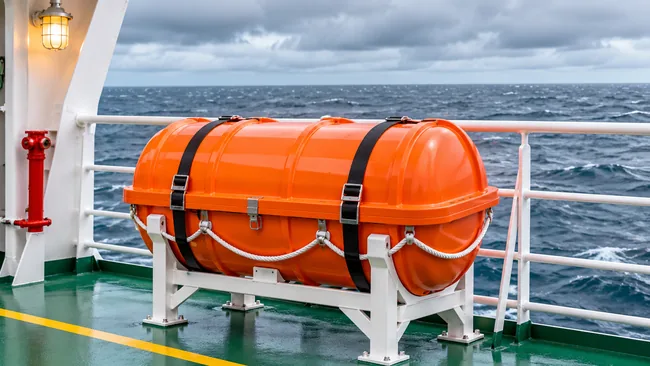
- Set out the steps of abandoning ship and what each launching appliance requires before use
- Explain the purpose of each type of personal protective equipment used on board and how to use it
Program Overview
Emergency Alarms, Signals and Protective Equipment
How a ship warns everyone on board of an emergency, and the gear crew members use to signal for help and protect themselves.
- Emergency alarms and signals on board
- Signaling equipment and pyrotechnics
- Personal protective equipment and its purpose
Life-Saving Appliances and Launching Arrangements
The life-saving appliances a ship carries and the arrangements that get survival craft and life rafts into the water.
- Types and uses of life-saving appliances
- Launching appliances and arrangements
- Life raft launching appliances
Survival Craft, GMDSS Radio and Rescue Boats
What happens once craft are in the water: handling survival craft and rescue boats, using the ship’s radio systems and carrying out rescues.
- GMDSS radio systems
- Operating survival craft and rescue boats
- Rescue operations and techniques
Certificate Awarded (Paid)
Pass the course assessment to earn it. The course is free to study; the certificate is optional and has a fee.
Job Outlook
The skills apply to work on board ships and in maritime safety, where crews keep emergency equipment ready, take part in rescue operations and follow abandon ship procedures.
- Occupational Health and Safety Specialist
Good for: Mariners refreshing their knowledge of safety appliances, and students new to how ships prepare for and handle emergencies on board.
Keep in mind: Launching a raft or putting on protective gear still needs hands-on drills, and the certificate is a certificate of completion, not a seafarer qualification.
Bottom line: It links each piece of ship survival equipment to the rescue and abandon ship steps it supports, with the history behind today’s rules.
Frequently Asked Questions
Does the course deal with ship radio systems?
Yes. One lesson in the life-saving appliances part is given to GMDSS radio systems, next to the lessons on launching arrangements, survival craft, rescue boats and rescue techniques.
Why does the course bring up the Titanic?
The sinking is used to show how past disasters shaped shipboard safety. The course links the equipment it describes to lessons learned from ships that went down with inadequate emergency tools, and credits the agencies and protocols set up after such incidents.
Is any of this useful away from ships?
Partly. Some of the regulations on emergency equipment it discusses reach beyond shipboard settings to other machines and to daily life, although the lessons and examples stay with watercraft and the people on board.



There are no reviews yet.